Within this new age of AI, there’s a lot of hype and fear mongering. This piece is different. I want to provide you with positive ways to think about leveraging AI for visibility.
Visibility is Important — Human or AI
There are a number of ways to stay visible—appearances at events, traditional press, and of course, social media. The good news is that “AI optimization is the new SEO.”
In the same way I want you to periodically check your Google and YouTube search results, the exciting thing about AI visibility (or ranking within the answers) is that you can be the exact answer your clients/customers/casting is looking for.
Sometimes, that’s people discovering you. Other times, that’s reminding people about you. Regardless, just like in an audition situation, you want to be their answer — the singular solution! 💫
Step 1: Search for Your Name
The first step is seeing what these AI tools are already saying about you. Having a website allows you to take authority of your name and control the narrative.
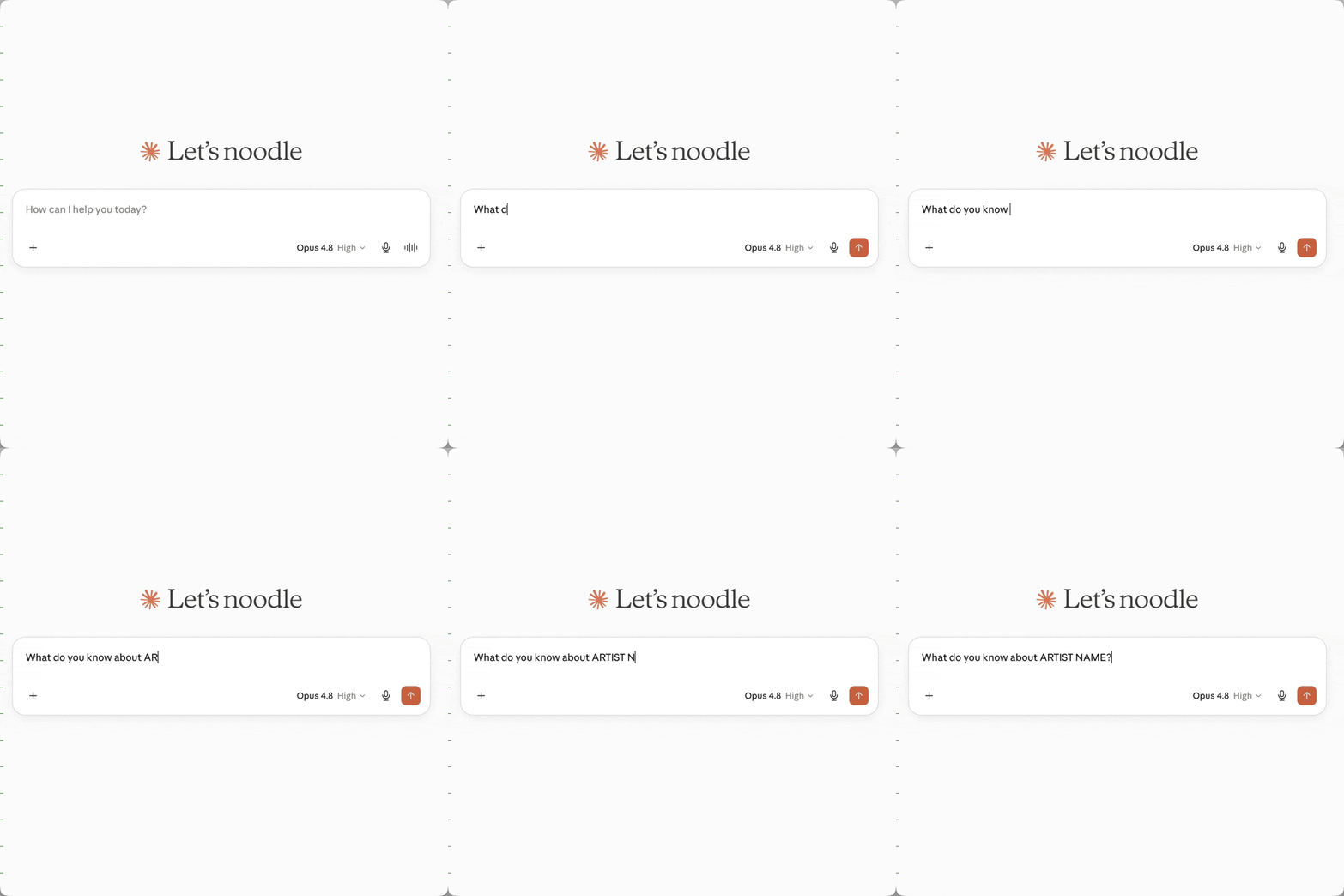
In technical terms, this is called a branded search. It’s when someone asks Claude/ChatGPT/ Gemini about you:
What’s {Artist Name} up to these days?
What do you know about {Artist Name}?
You have strong control over what shows up on AI search results through the words on your website, updates on social media, and keeping things current on industry websites like IMDB or IBDB.
Step 2: Search as Your Clients
While it’s great when people are asking about you, not everyone has (or maintains) that level of industry recognition. The good news is that you may not need to!
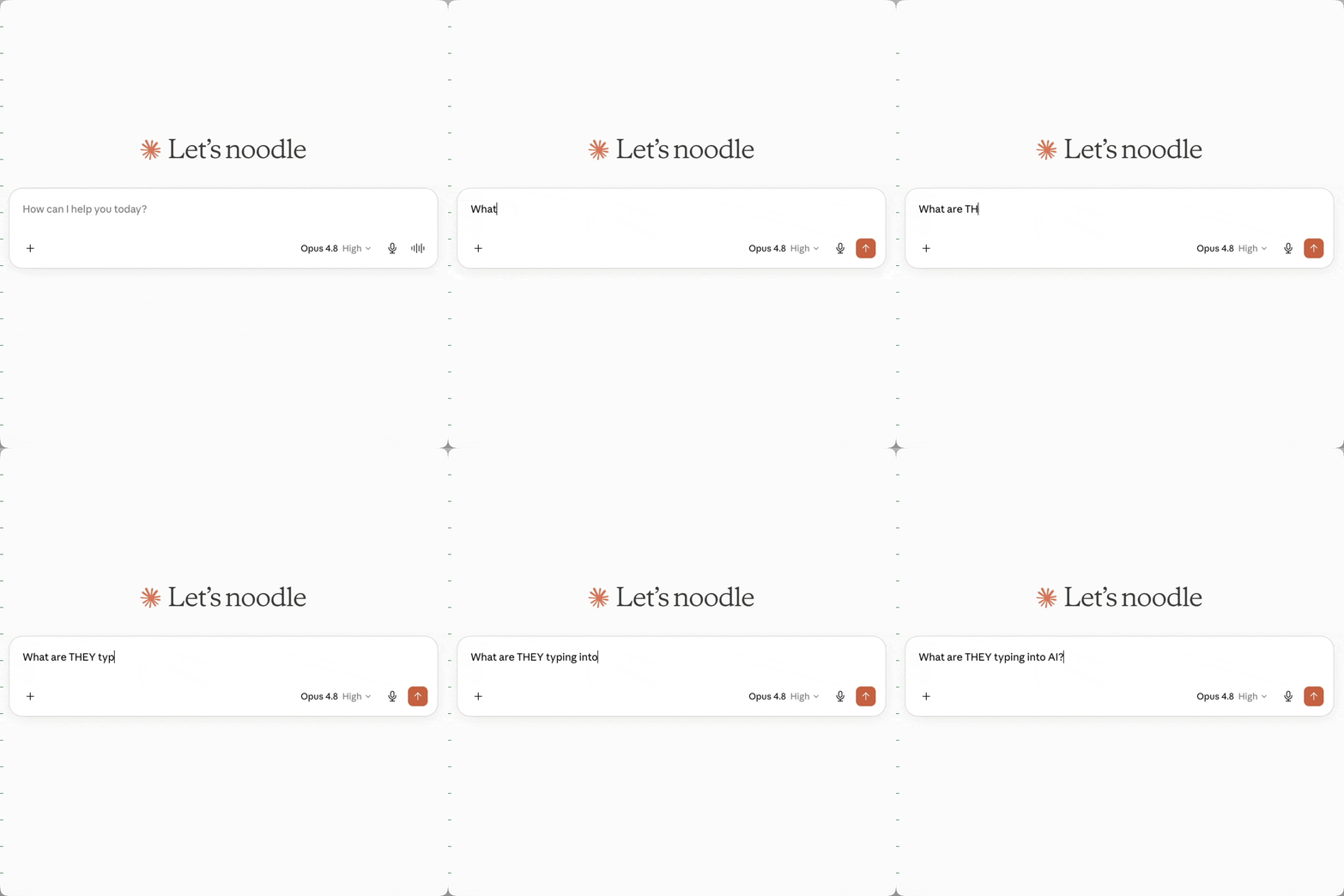
A non-branded search is when someone gives AI a question or request where you want to surface in the response:
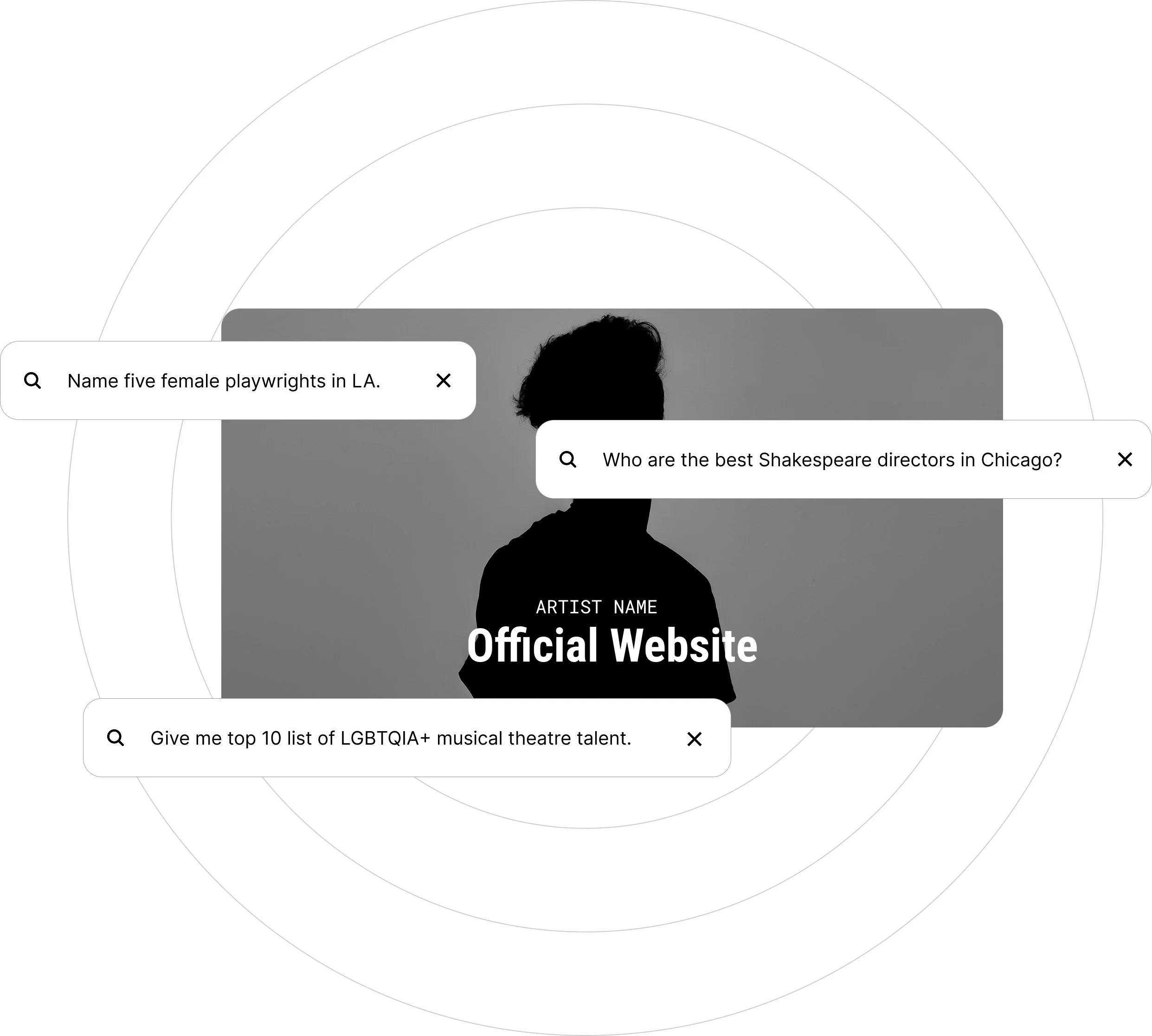
Who are the best directors in Chicago for the development of a new musical?
Give me a list of the top 10 female playwrights based in LA.
Name five New York actors in their seventies to play a lawyer — ideally BIPOC.
Give me a list of LGBTQIA+ musical theatre talent.

Step 3: Share Exactly Who You Are
What makes this exciting is that you can be found and contracted without a huge résumé or career. To increase your visibility in AI, I’d encourage you to find ways to weave the front-facing details of who you are into your bio. For example:
Location: “…based in [city name].”
Age or Range: include your birthday or share clues like how many kids, grandkids, or decades you have in the business
Identity: consider including your gender, race, sexuality, etc.
Artist Name (she/her) is a Chicago director focused on LGBTQIA+ stories.
Artist Name is a Black, non-binary, and queer singer-songwriter.

ACTION STEPS for AI Visibility
Search for your name.
If you don’t like the results, work on improving your website structure and text descriptions.Identify your “clients” and what they’re typing into AI.
If your close colleagues are being cited over you, study their online presence — particularly their bios. Model some of their choices for searches you want to appear in.Revisit your website and bio(s).
It’s really all about feeding the right words to the robots that power these searches. If you want a human to help you figure this out, book a free call below!